Segmental block retaining walls
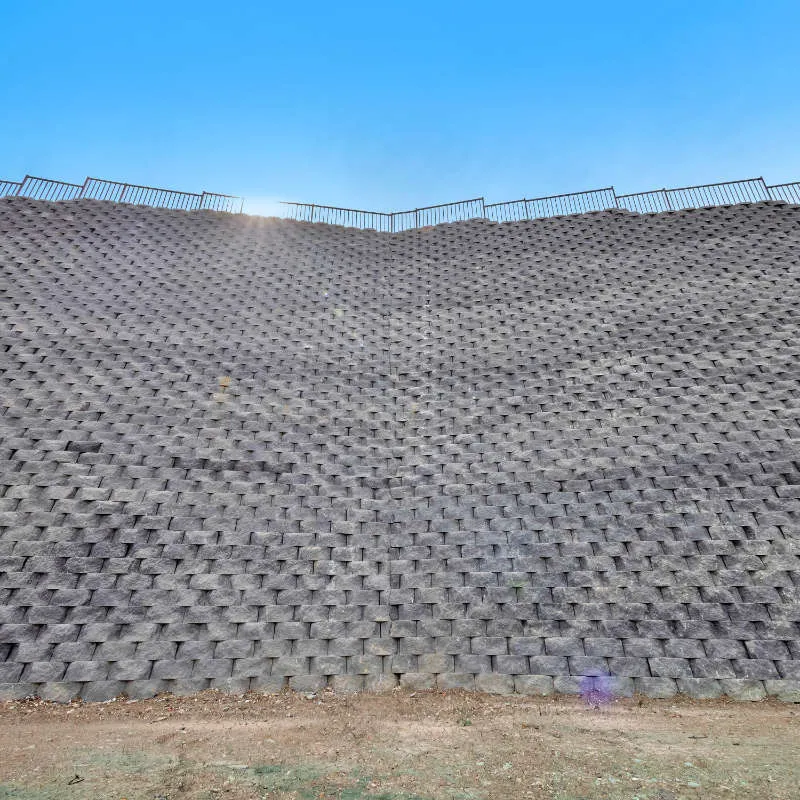
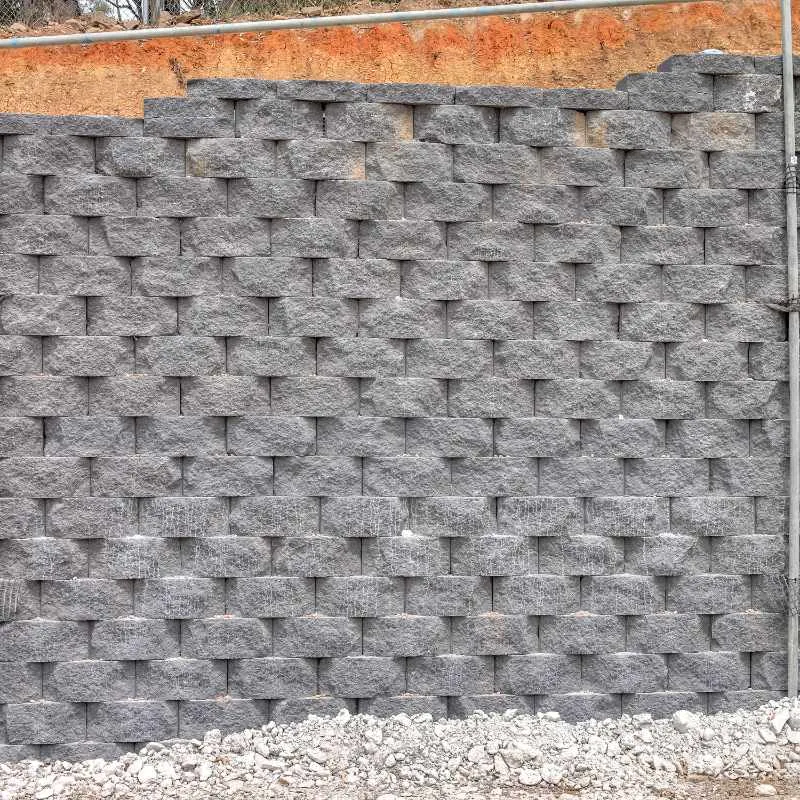
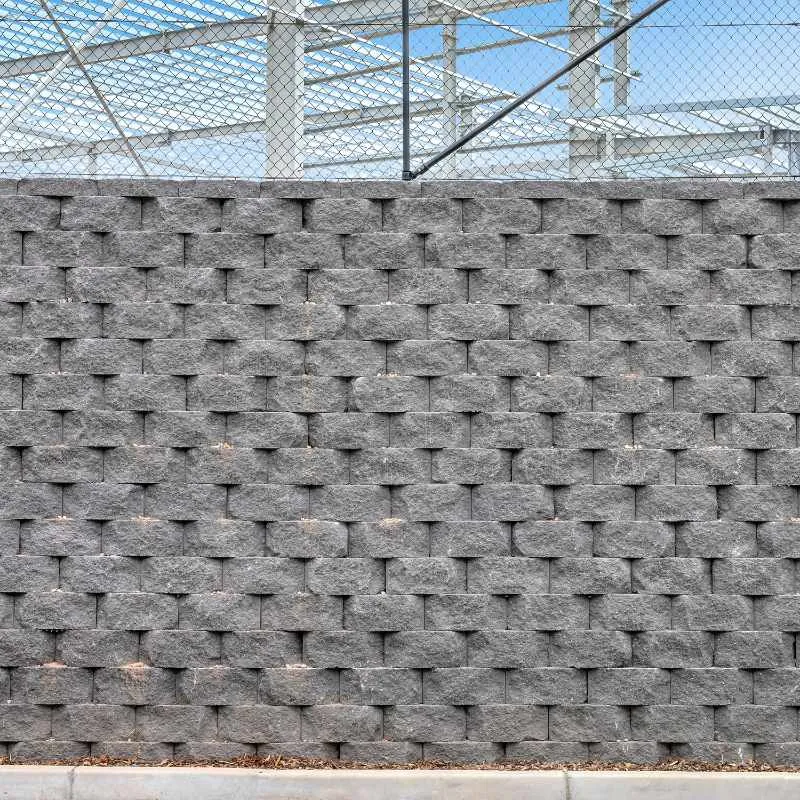
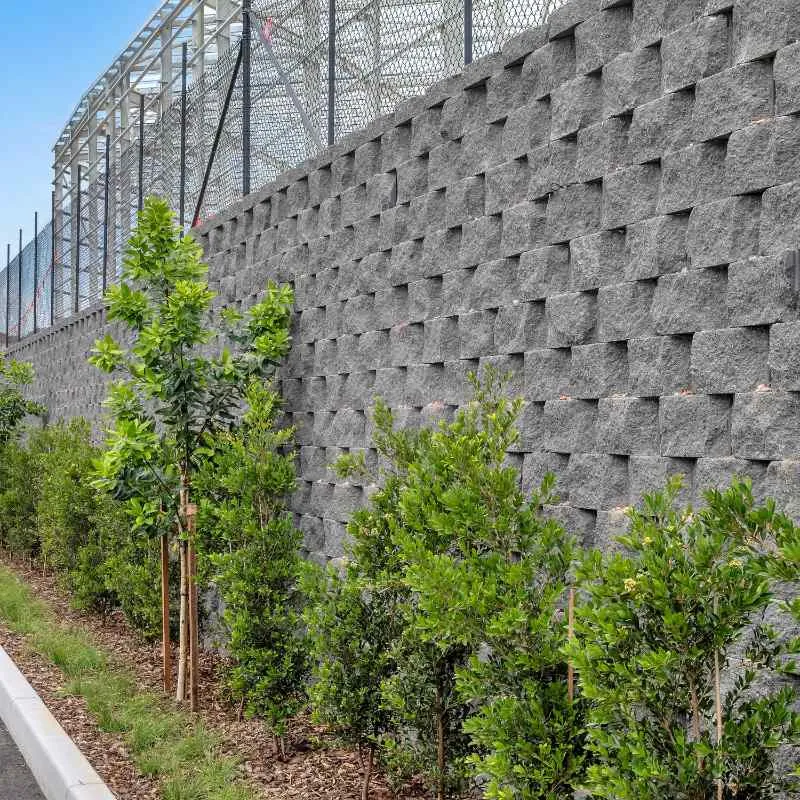
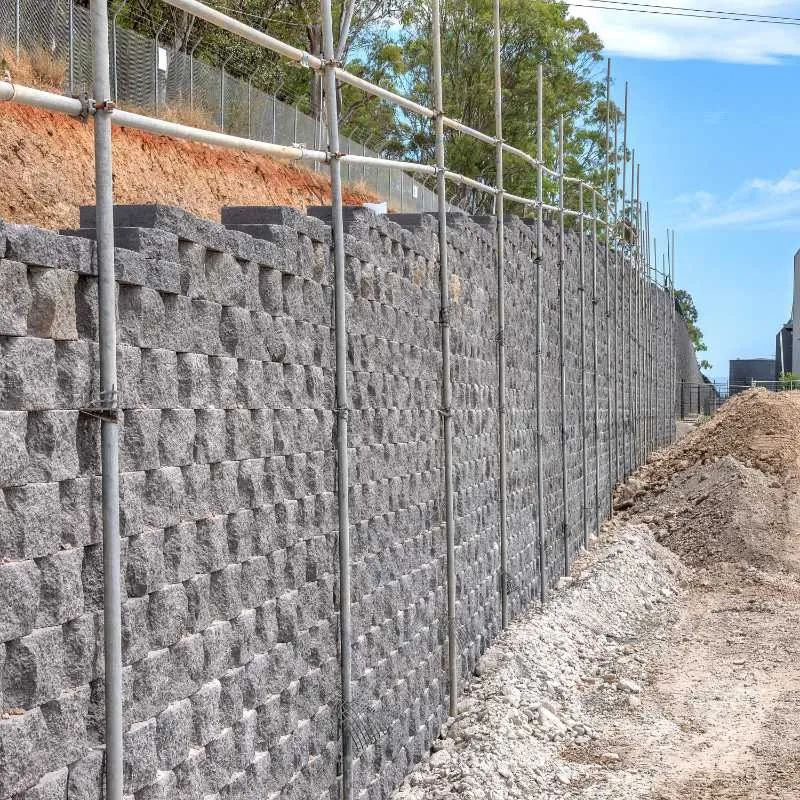
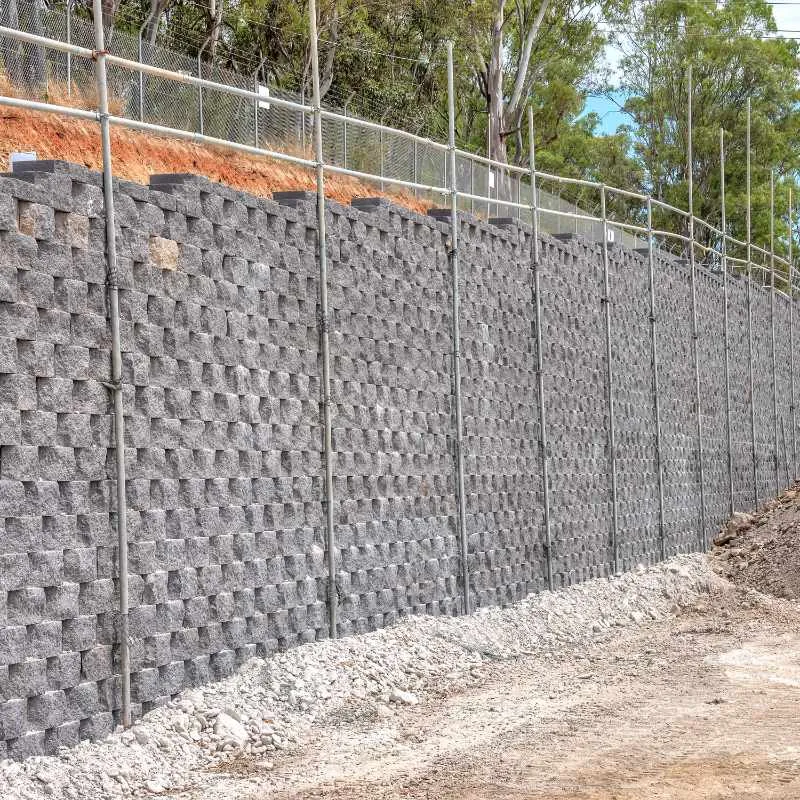
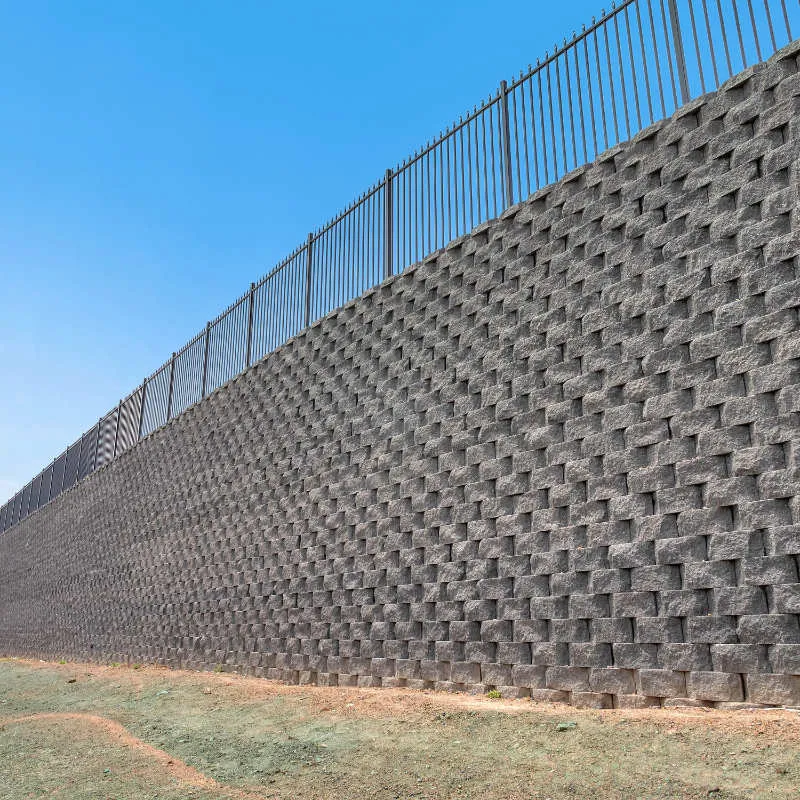
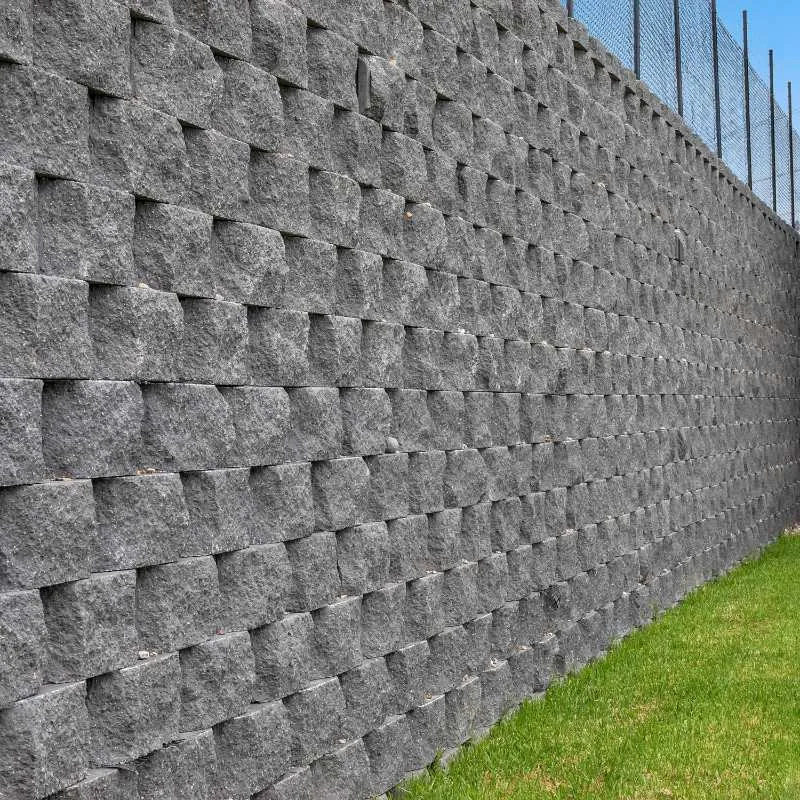
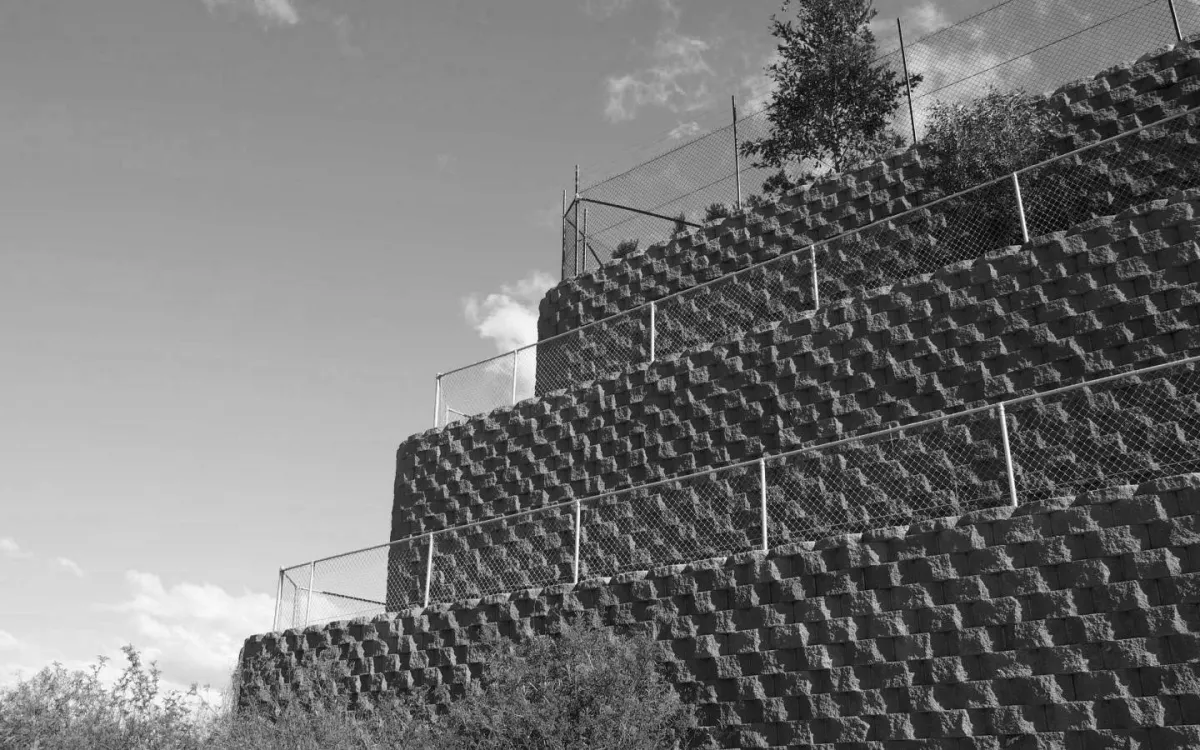
A segmental retaining wall is built from individual concrete blocks, dry-stacked with no mortar, that lean into the bank at a set batter. We install two proven segmental systems, Keystone and Allan Block, and this page explains how the family works and how we choose between them.
Where it fits
- Subdivision and estate walls
- Commercial site boundaries
- Landscape terraces
- Schools and community buildings
- Residential level changes
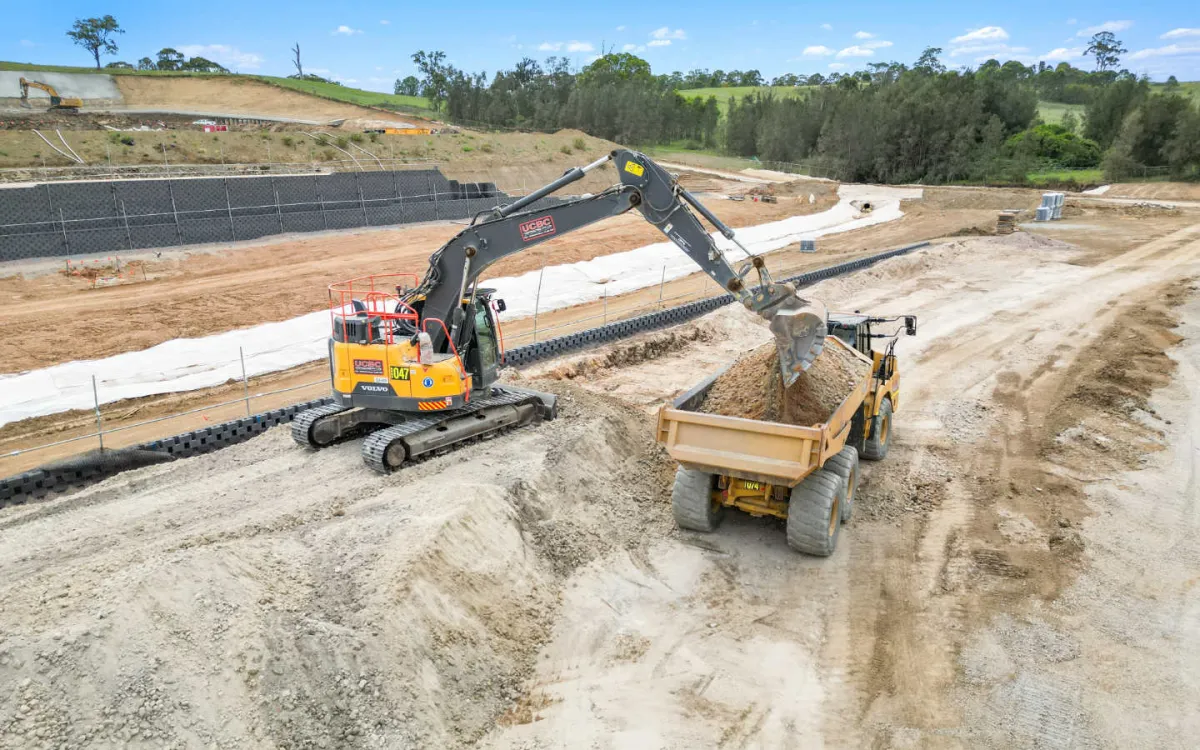
- Reinforced-soil walls with geogrid
Gravity or reinforced
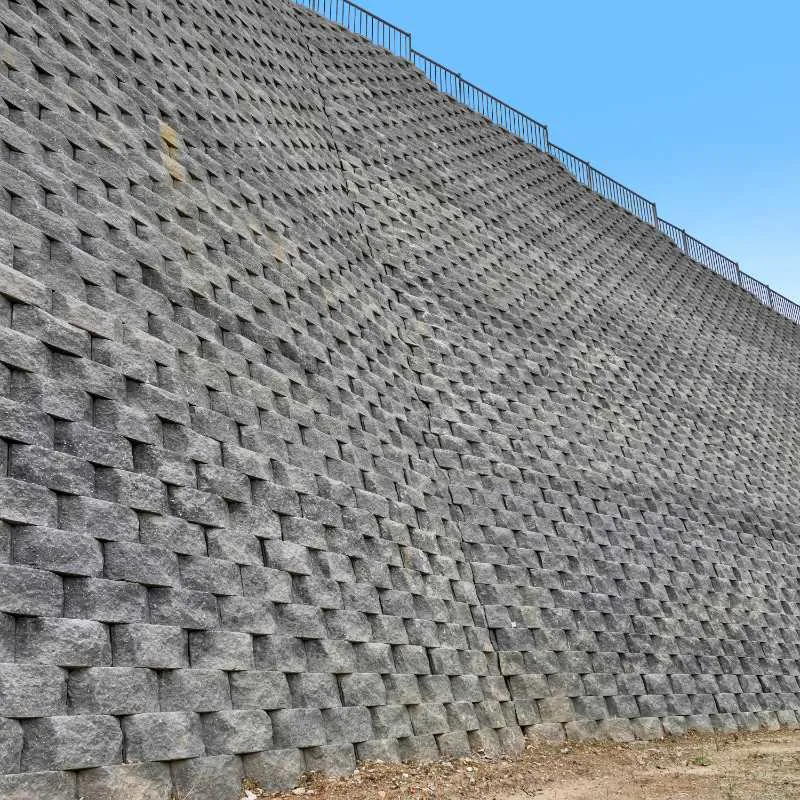
Up to roughly a metre, a segmental wall stands on the weight of its own blocks and the friction between courses: a gravity wall. Above that, layers of geogrid are laid into the compacted backfill at intervals and tied into the blocks. The geogrid turns a wedge of soil behind the wall into part of the structure. The engineer sets the geogrid lengths and levels from the wall height, the soil and whatever sits above the wall.
Keystone or Allan Block
Both are excellent; they lock differently. Keystone uses fibreglass pins between courses and comes in split-face and flush-face units, which makes it our usual choice for estates and public-facing walls that want a masonry look. Allan Block uses a rear lip and hollow cores filled with drainage rock, which lays quickly, drains through the face and handles tight curves, so it suits residential landscapes and serpentine walls. We will recommend one for the site rather than ask you to choose.
Base, batter and drainage
A segmental wall is only as good as its first course. We prepare and compact a granular base, set the first course dead level, and build the batter into the wall from there. Drainage aggregate behind the blocks and a subsoil pipe at the base keep water pressure off the wall. Capping units finish the top.