How it works
Soil is strong in compression and weak in tension. Geogrid supplies the tension. Laid horizontally and compacted into the fill, it grips the soil along its whole length; connected to the block face, it stops the face from moving outward. The result is a composite mass, wide and heavy, that resists overturning and sliding far better than a stack of blocks could.
What it means on site
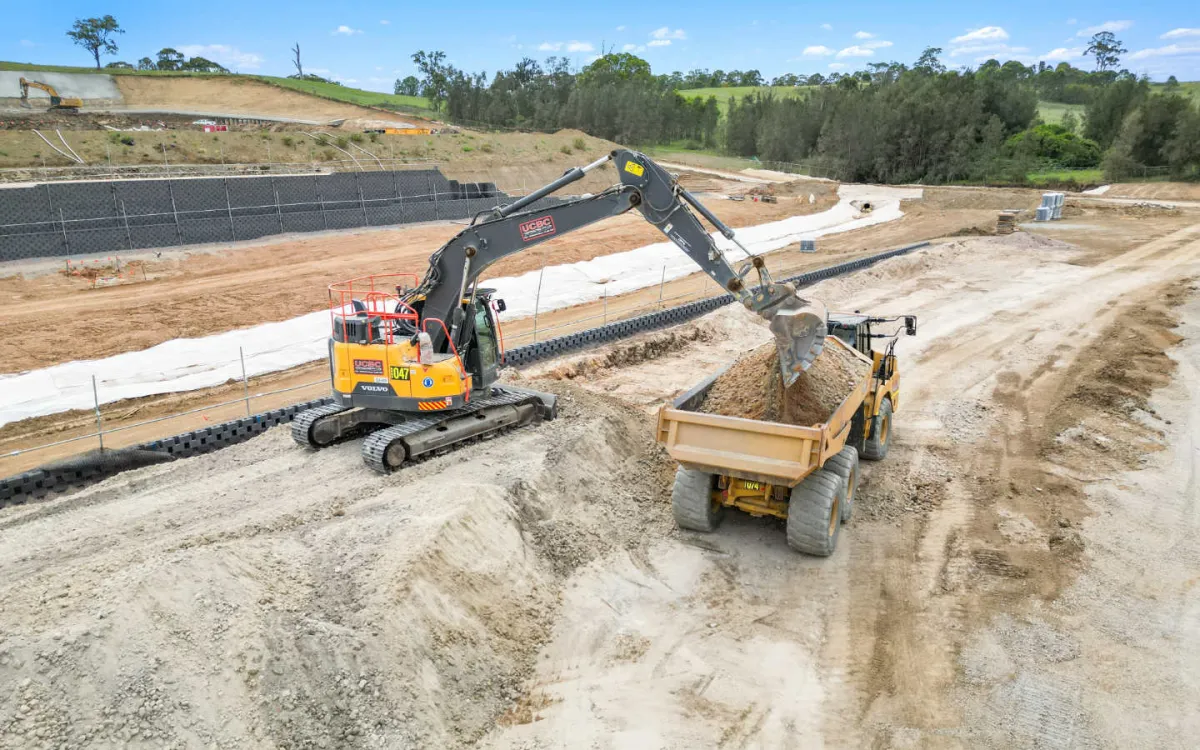
The excavation behind the wall must extend the full grid length, which can be most of the wall height. Backfill goes in lifts of a few hundred millimetres, compacted, with a grid layer at each specified course. Plant cannot run over the grid until it is covered. It is methodical work, and it is why a reinforced wall takes longer per metre than a gravity wall of the same face.
When you do not need it
Below about a metre a segmental wall stands as a gravity structure. Mass systems such as Keymass and crib block reach height on their own weight and geometry without geogrid, which is why they suit sites where the excavation behind a reinforced wall is not possible.