
Home / Guides / Drainage behind retaining walls: why walls fail and how ours do not

Drainage behind retaining walls: why walls fail and how ours do not

Most retaining walls that fail are pushed over by water, not soil. Saturated backfill weighs more and pushes harder than the engineer designed for, and if water cannot escape it builds hydrostatic pressure directly against the wall. The fix is built in, not added later: a drainage layer of clean aggregate behind the face, a slotted subsoil pipe at the base falling to an outlet, filter fabric between the aggregate and the soil so fines do not clog it, and weep holes or an open face where the system allows. Crib block, gabion and hollow-core segmental walls drain through their own faces, which is one reason they suit wet ground. Rigid walls such as sleeper and core-filled block rely entirely on the drainage behind them, so on those it is the most important part of the job.

What water does to a wall

Dry soil pushes on a wall with a predictable, designed-for pressure. Add water and two things happen: the soil gets heavier, and the water itself pushes with a pressure that increases with depth. A wall designed for dry earth can see its load double when the backfill saturates. That is why walls fail after rain, years after they were built.

The drainage system

Behind the face, a zone of clean crushed rock lets water fall freely to the base. A slotted pipe wrapped in filter sock collects it and carries it to a stormwater connection or an outlet on the low side. Filter fabric between the rock and the native soil keeps clay fines from washing in and choking the drain. Where the wall face allows, weep holes give water a second way out.

Systems that drain themselves

An open crib face, a gabion basket and the rock-filled cores of an Allan Block wall all let water straight through. They still get a base drain, but they are forgiving. A concrete sleeper wall or a reinforced block wall is a solid panel; everything depends on the drainage behind it, and we treat it accordingly.
Questions we are asked

Where does the drainage pipe go?
To a stormwater connection where one exists, or to a free outlet on the low side of the wall. It must fall continuously and must not discharge onto a neighbour.
Can drainage be added to an existing wall?
Sometimes, by coring weep holes or excavating behind the wall to install a drain. It is far cheaper to build it in.

Specifying a wall?
We will help.

Send the drawings or describe the site. We recommend a system and price it, with the certification included.

(02) 9344 9168
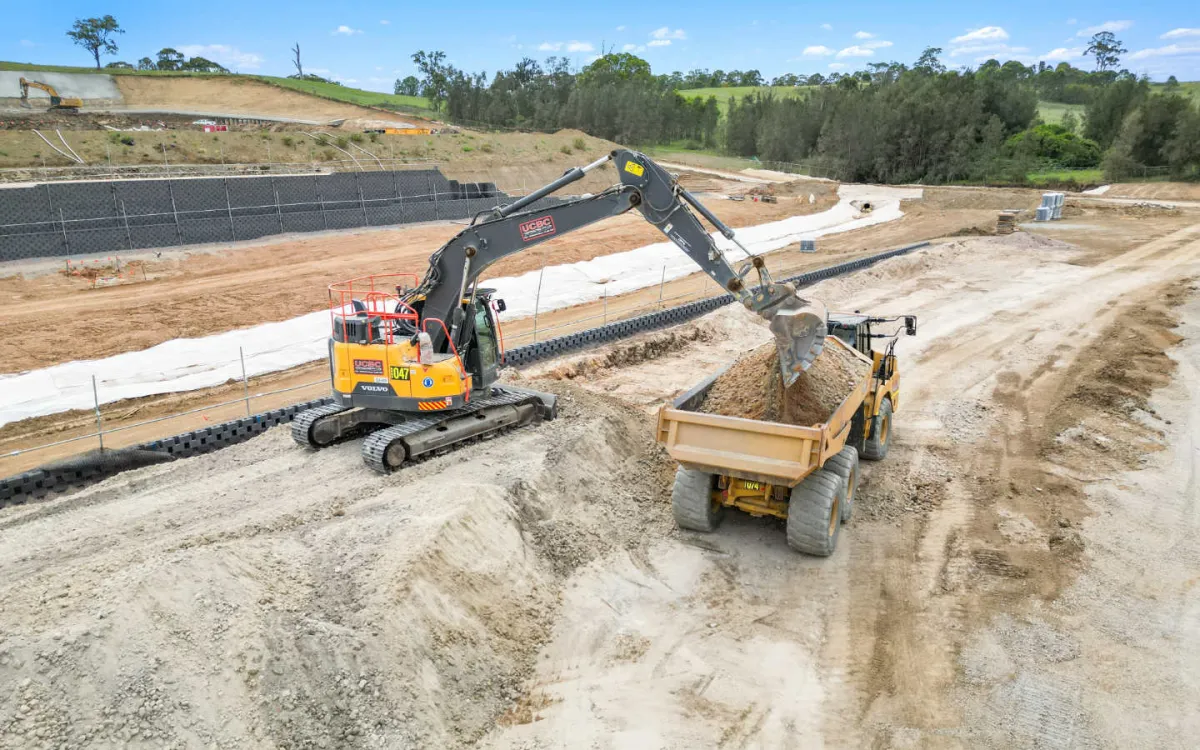
UCBC retaining wall site