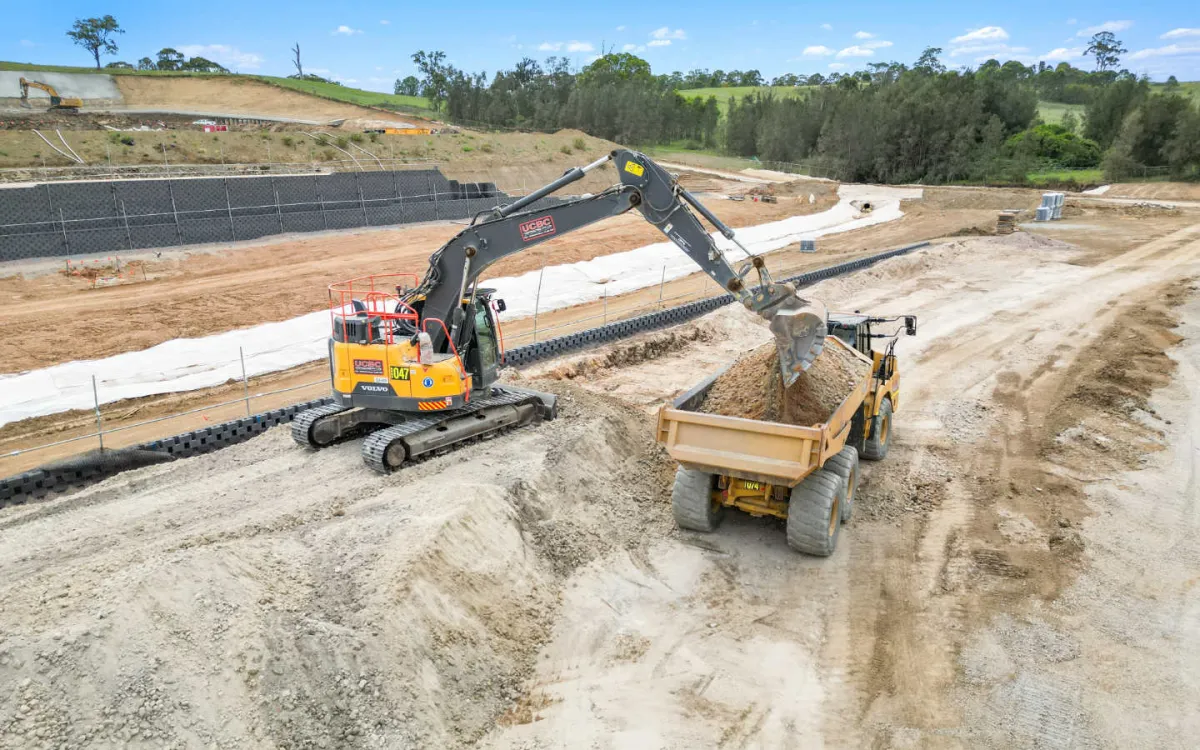
Height is the biggest driver, but not in a straight line: doubling the height more than doubles the cost. A taller wall needs a deeper section, geogrid or steel, more excavation and more backfill, and above the exempt-development limit it needs engineering and approval. After height, surcharge: a wall carrying a driveway, slab or building is a different structure from one holding a garden. Then ground: reactive clay, fill and wet sites push toward flexible or heavily drained systems and add cost in drainage. System and finish come next: a finished masonry face costs more per square metre than an industrial precast face, and a machine-placed wall is faster than a hand-laid one. Access decides plant: a site an excavator can reach is cheaper than one that must be hand-fed. Certification is a fixed component on any engineered wall. We do not publish per-metre rates because they are usually wrong; we price the wall from the drawings and the ground.
Height and what it carries
Below a metre most walls are simple gravity structures. Above it, reinforcement, deeper excavation and approval arrive together. Add a surcharge and everything is designed heavier. The most useful thing you can tell us at pricing is what will sit above the wall.
Ground, water and drainage
A geotechnical report prevents the most expensive surprise, which is discovering the ground after the wall is priced. Wet sites need more drainage and often a different system; rock near the surface can help or hurt depending on the footing.
System, finish and plant
An industrial batter nobody looks at should not pay for a finished masonry face. A long estate wall that is the streetscape should. Machine placement, where access allows, is faster and cheaper per square metre than hand laying, which is why plant access is one of the first things we check.
Questions we are asked